By: Jasmina Trajkov, museum advisor
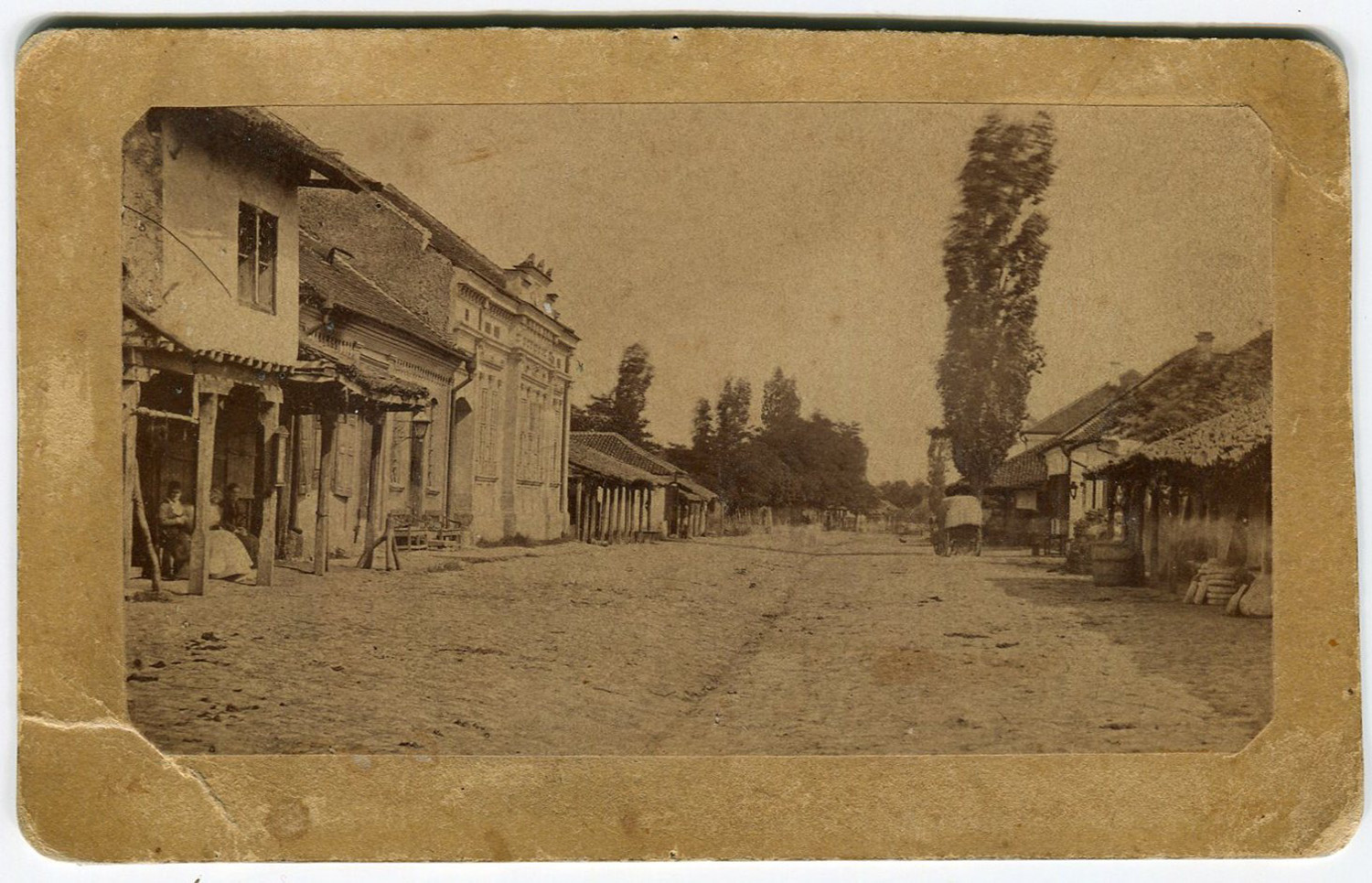
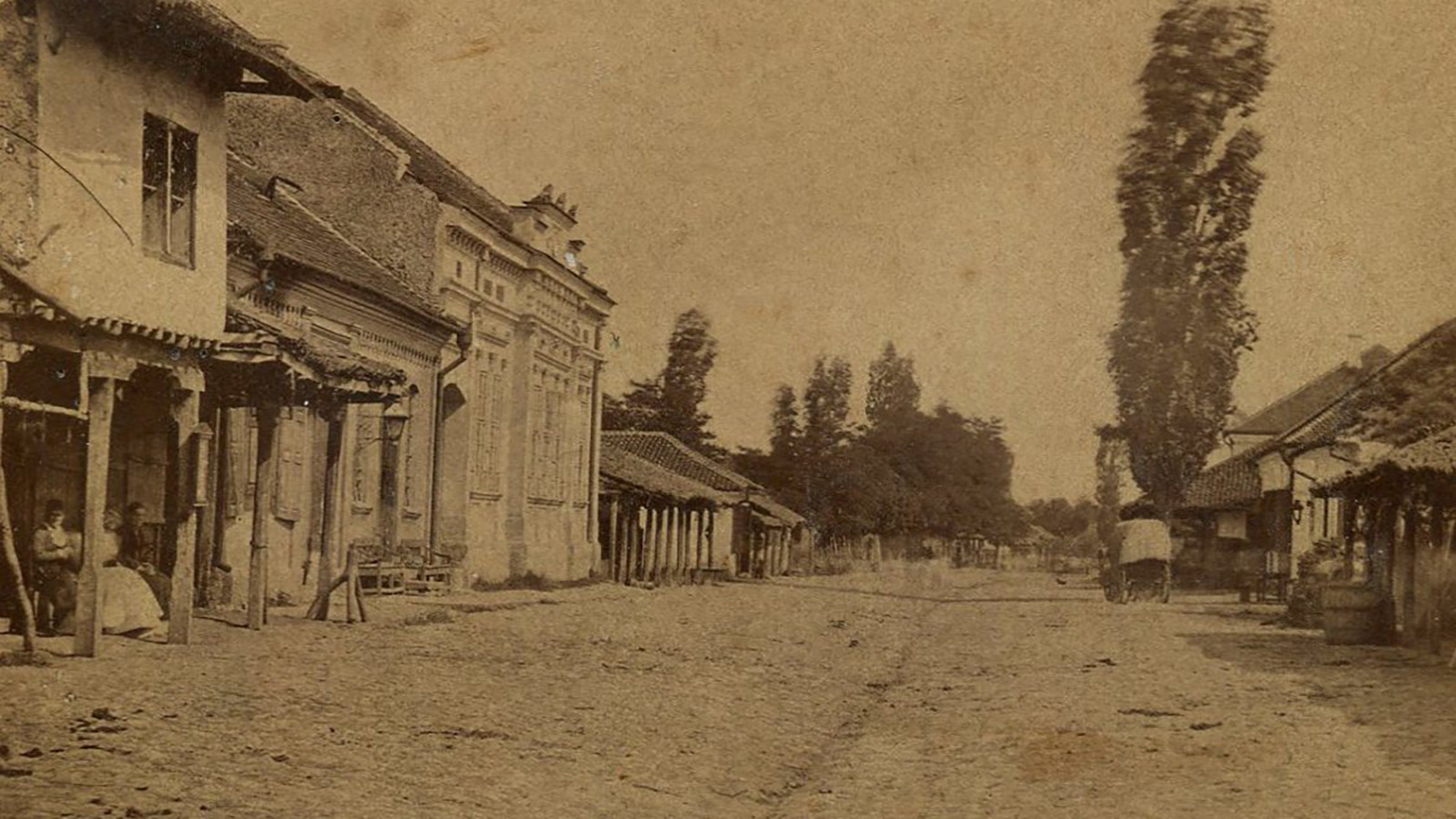
If you have followed the website, social media pages, exhibitions, or publications of the Regional Museum of Jagodina over the past few years, you have almost certainly seen Emanuel Klar’s 1878 photograph depicting part of Jagodina’s Main Street. It is probably our museum’s most popular object online—shared countless times as the first and oldest photograph of Jagodina, discussed, colorized, analyzed, and debated from every possible angle.
There is just one small problem.
It is not the first photographic image of Jagodina.
The oldest known photographs of the town were taken by Ivan V. Groman during the First Serbian–Ottoman War of 1876–1877. As a war photographer, Groman documented Jagodina one or two years before Emanuel Klar captured his famous view of the Main Street. These photographs are part of Groman’s photographic album and are preserved today in the Belgrade City Museum.
Of course, this has done nothing to diminish the popularity of Klar’s photograph. Quite the opposite—it has become something of an “internet celebrity” among the Regional Museum’s collections. And, as often happens with internet fame, numerous theories have followed.
The first claimed that the photograph was not taken in 1878, but in 1873.
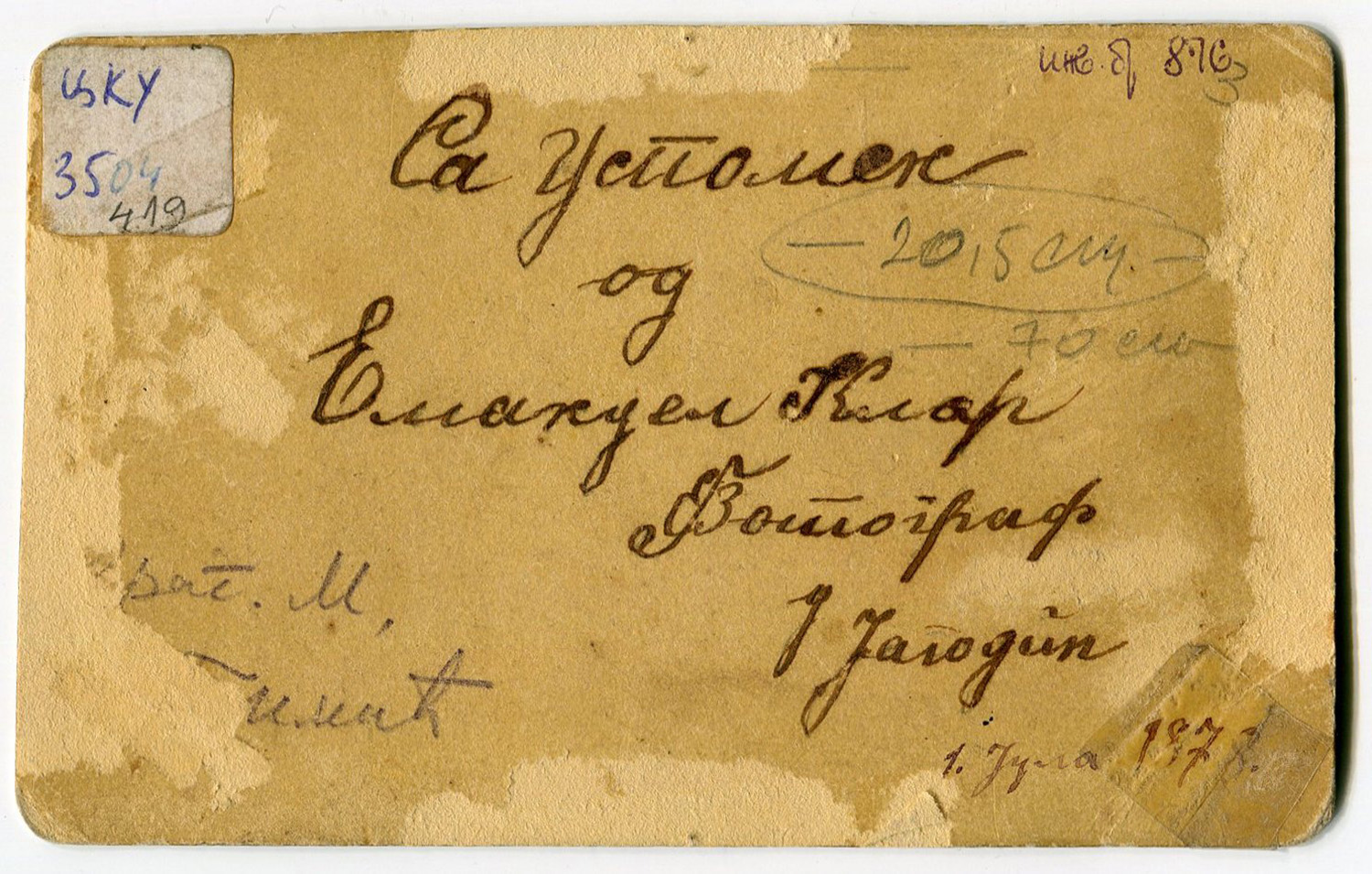
However, the original photograph is preserved in the Museum’s collection, and on the reverse of the mounting card is Klar’s own handwritten inscription: “As a keepsake from Emanuel Klar, photographer in Jagodina, 1 July 1878.”. The date is therefore not a later assumption but information provided by the photographer himself.
The photograph then embarked on another “adventure.” Someone digitally colorized it using an app, and the colorized version began circulating online, often without any indication that it was a modern digital interpretation. Attractive to look at, certainly—but the original is, of course, black and white.
Another debate soon followed: “That isn’t Jagodina’s Main Street at all. It’s Ružica Milanović Street.”
In fact, it is Jagodina’s Main Street. The photograph shows a section of what was then the Main Street, looking from the present-day Cultural Centre toward the building that now house the Regional Museum. Klar captured this part of the town at a moment when the old Ottoman-style marketplace was gradually giving way to a modern Serbian town with buildings inspired by Western European architecture. This is precisely what makes the photograph such an exceptional historical document of Jagodina’s urban development.
Perhaps the most intriguing claim was that photographers of the time could not possibly have taken photographs outdoors.
That sounds plausible—until one looks at the history of photography.
Outdoor photography in the 1870s was certainly not easy. The wet collodion process required bulky equipment, chemicals, and even a portable darkroom. Difficult? Absolutely. Impossible? Not at all. On the contrary, several photographers in Serbia ventured beyond their studios during this period to document towns, landscapes, and historical events. Among them were Anastas Jovanović, Lazar Lecter, Ivan V. Groman, and Emanuel Klar. Klar’s photograph was not an isolated experiment but part of a broader European trend of producing urban views in the popular carte de visite format.
It is also interesting that Klar’s photograph is sometimes referred to as Jagodina’s first postcard. However, there is no evidence to support this claim. The original photograph is mounted on card and bears a handwritten dedication, suggesting that it was intended as a keepsake or a personal gift. Printed postcards, in the modern sense of the word, did not appear in Jagodina until the end of the nineteenth century, while the earliest dated example preserved in the Regional Museum’s collection is from 1899.
So, the next time you come across Emanuel Klar’s famous photograph on social media described as “the first and oldest photograph of Jagodina,” remember that the story is a little more complicated.
Klar’s 1878 photograph remains one of the most valuable visual records of old Jagodina and one of the Regional Museum’s most important exhibits. However, the title of the oldest currently known photographic images of Jagodina belongs to the photographs taken by Ivan V. Groman during the war of 1876–1877.
If we wished to retain the adjective “oldest” for Klar’s photograph, it would be more accurate to call it the oldest known photograph of Jagodina’s Main Street.
History, much like photography, sometimes comes into sharper focus when we take a closer look at the original.